When buying wooden pallets for a factory, finalize the specifications first, then ask for a price; don't just choose a nice picture online. The seven criteria below are enough for a purchasing agent to send a single email to the factory without having to ask for clarification three times.
This article is for factories, warehouses, and export companies needing to purchase large quantities of wooden pallets in 2026. Print the checklist, fill in the numbers, and send it. Royal Contact FormHoang Gia Company manufactures acacia wood pallets in Ho Nai, Dong Nai; we do not sell plastic pallets.
What does the factory need to finalize when purchasing wooden pallets?
The factory should finalize all seven items: dimensions, 2-way or 4-way dimensions, load, wood type and moisture content, ISPM 15, quantity and delivery schedule, and CO/CQ documentation. Missing even one item will result in the factory making items based on habit — misalignment of shelves or jammed doors.
No need for lengthy writing. One A4 page, with each line numbered or with/without text, is sufficient. If any lines are missing from the wooden pallet order, the factory will ask again—causing delays in the production schedule. The sections below explain why these lines need to be included.
1. Dimensions of racks, carts, and containers
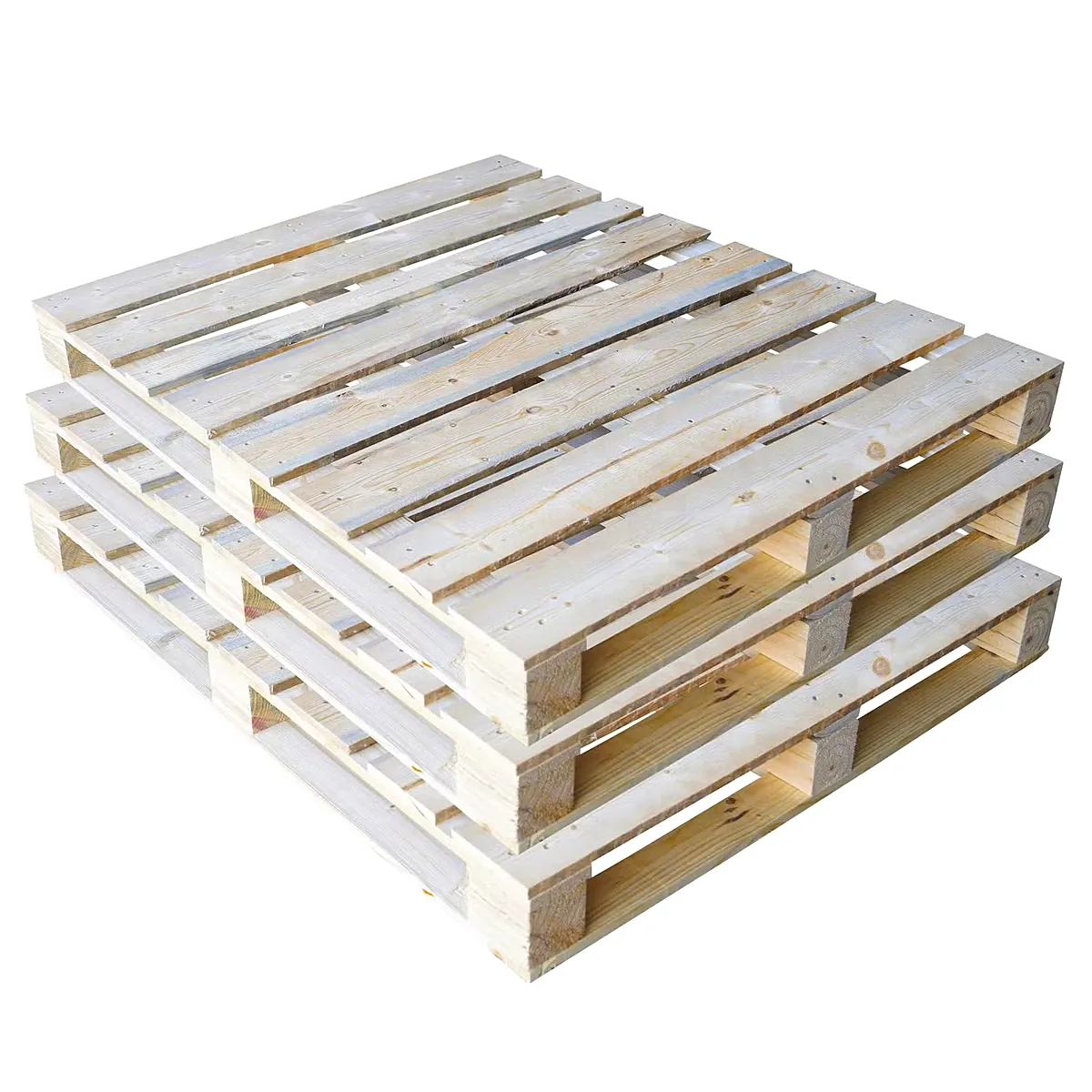
Size is the first criterion when buying wooden pallets. Write the dimensions in millimeters: length × width × height. Add the forklift leg opening. Don't write "large size" or "approximate Euro size".
Two common sides: 1,200 × 1,000 mm (industrial, container) and 1200 × 800 mm (Euro / EPAL 1). “EPAL-sized” pallets are not EPAL-approved pallets. Details of the floor plan are located at... standard pallet size.
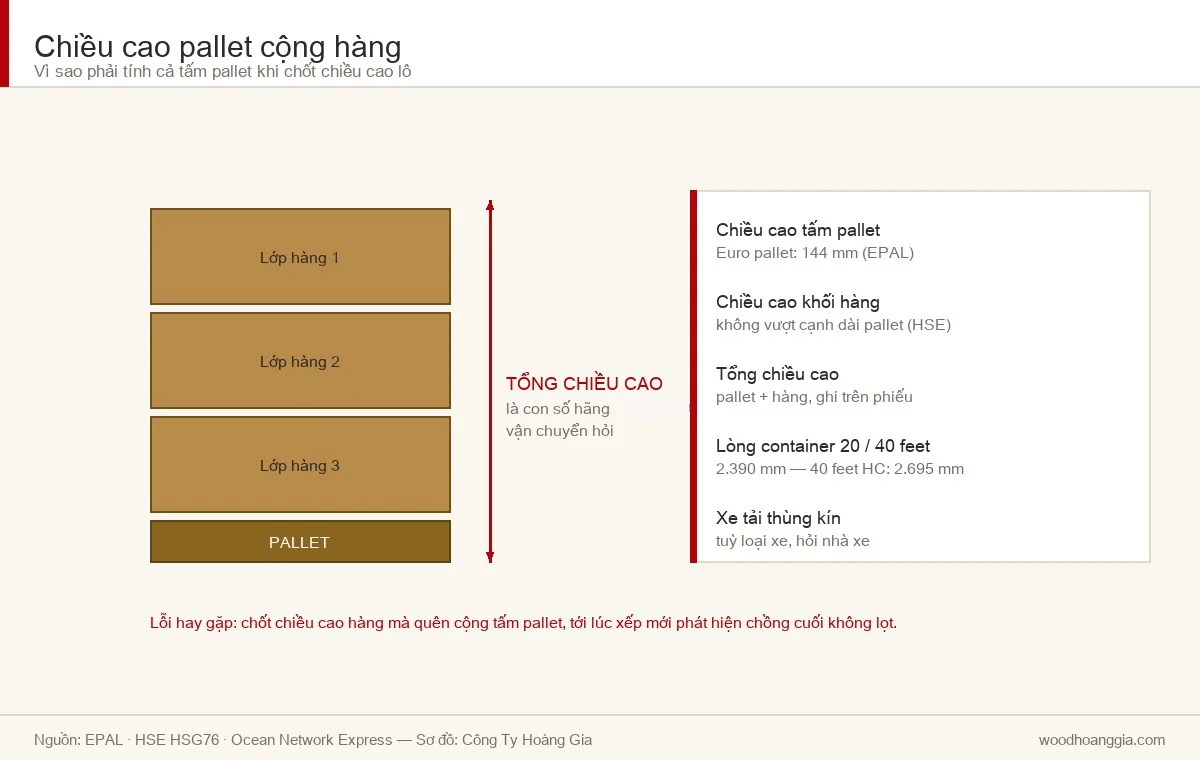
A 20′ dry container has an interior size of approximately 5.90 × 2.35 m. Pallets measuring 1,200 × 1,000 mm are typically stacked 10 per 20′ container. A 15–20 mm offset per pallet is sufficient for space to wedge the pallets. For export, tolerances (e.g., ±5 mm) should be specified, and overlapping slats are prohibited.
Measure the shelf opening, the fork dimensions, and the truck bed dimensions before sending it to the workshop. Keep a caliper or measuring tape next to the sample pallet to avoid assembling the slats in the wrong orientation.
2. Two-way or four-way pallets
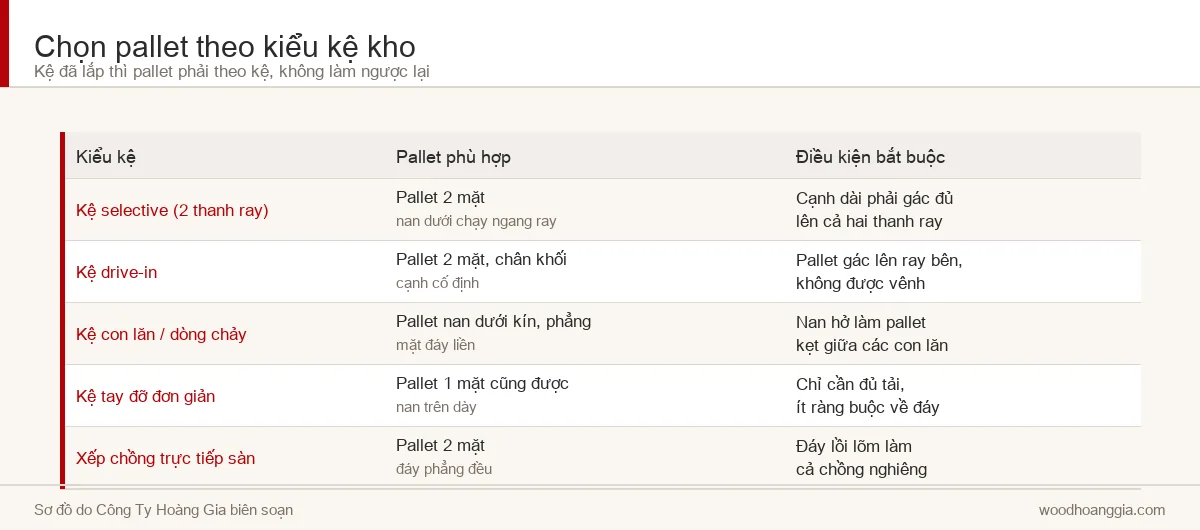
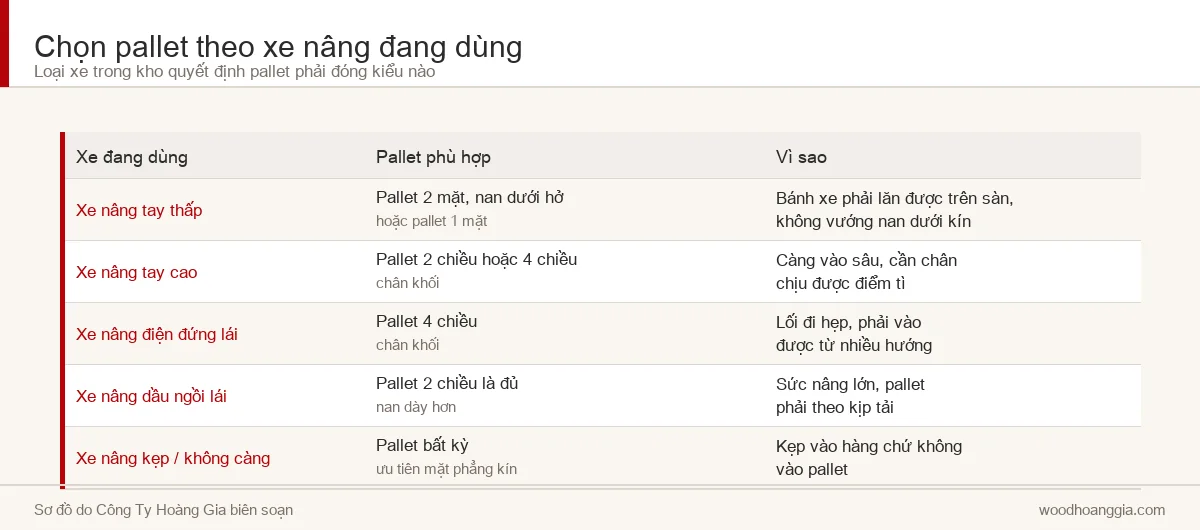
Lifting direction is independent of the surface size. 2-way pallet: the forks enter from opposite sides. 4-way pallet: enters from all four sides, or two open sides plus two notched sides.
For single-axis warehouses, mainly used by hand trucks: 2-way pallets are usually sufficient. For multi-way warehouses, where container loading requires turning the container around: 4-way pallets are needed. 4-way pallets with notches are commonly used. Are not Insert the handcart into the notched edge — specify “how many sides the handcart is inserted from”.
Don't confuse 1-sided/2-sided with 2-dimensional/4-dimensional. 1-sided refers to the number of sides with spokes. You can order 2-dimensional-1-sided or 4-dimensional-2-sided. The four combinations must be separated on the quotation.
The factory should maintain a single primary lifting direction when purchasing wooden pallets. Mixing both within the same internal code causes warehouse staff to pick the wrong pallet and jams shelves during the scheduled delivery shift.
3. Static and dynamic loads
Load capacity is the third criterion when buying wooden pallets. Note the volume of a fully loaded pallet. Separate. static load (rest, shelf, stack) and dynamic load (Forklift, hand truck, loading onto a truck). Dynamic load is lower than static load.
The Royal Homepage mentions the load-bearing capacity of acacia wood pallets. from 1 to 2 tons — general range, not individual code numbers. EPAL 1 has SWL 1,500 kg According to EPAL documentation, EPAL-sized pallets are not automatically assigned that number. The selection method is as follows... wooden pallet load.
For the components (machine, mold, coil), you must specify the position of the components, not just the tonnage. A loosely spaced slat at the correct point will break even if the load is "under 1 ton". When receiving a batch: test one unit to ensure it's genuine and correctly oriented before importing the entire batch.
4. Wood type and moisture content
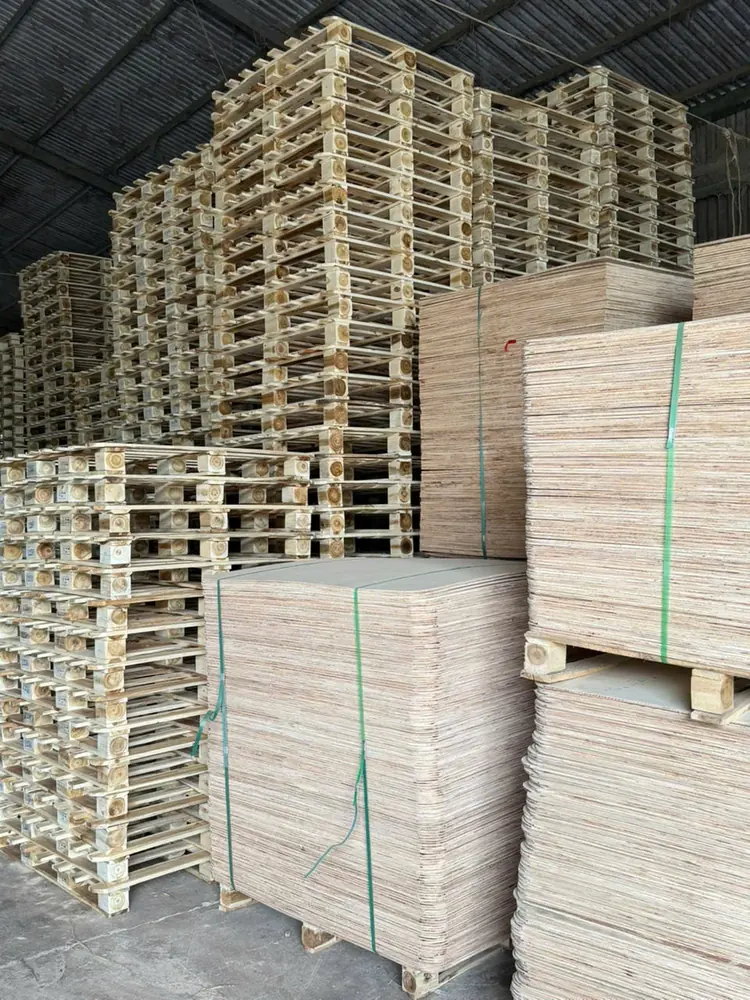
Hoang Gia manufactures acacia wood pallets. The type of wood must still be specified in the purchase contract because other workshops might mix in acacia, pine, or old pallet wood. Different types of wood require different fasteners, different insect infestations, and different drying methods.
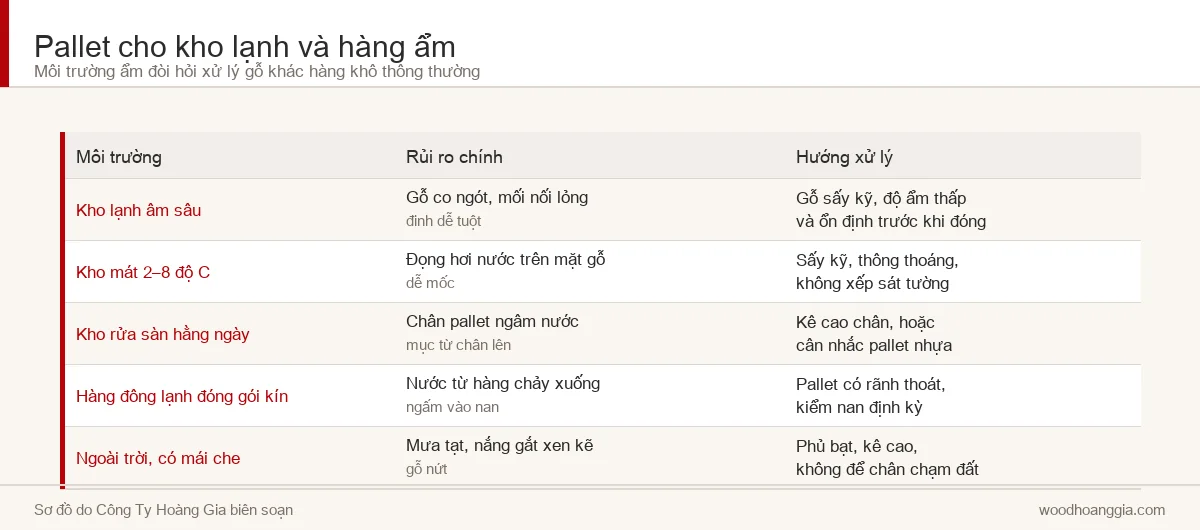
Humidity is not a figure to be discussed in this article. The factory's job is... Record the requirements and measurement method upon receipt.Measurements should be taken at the following locations (core or surface), how many points per pallet, and which machine is used. Wet wood is heavier, more prone to cracking in cold storage or hot containers, and more susceptible to termites when left on damp floors.
Exports typically require kiln-dried or ISPM 15-treated timber; these two processes are not entirely interchangeable. Kiln-drying reduces moisture content. ISPM 15 eliminates pests according to standard procedures. Orders should be separated: kiln-dried / un-kiln-dried, fumigated or heat-treated / un-fumigated.
Surface: sand smooth if the packaging is torn; leave untouched if only for internal stacking. Paint markings and logos: indicate the position of the slats, ensuring the paint does not obscure the IPPC. Buying wooden pallets without specifying the wood type is tantamount to mixing different types of wood.
5. ISPM 15 if goods are at the border crossing.
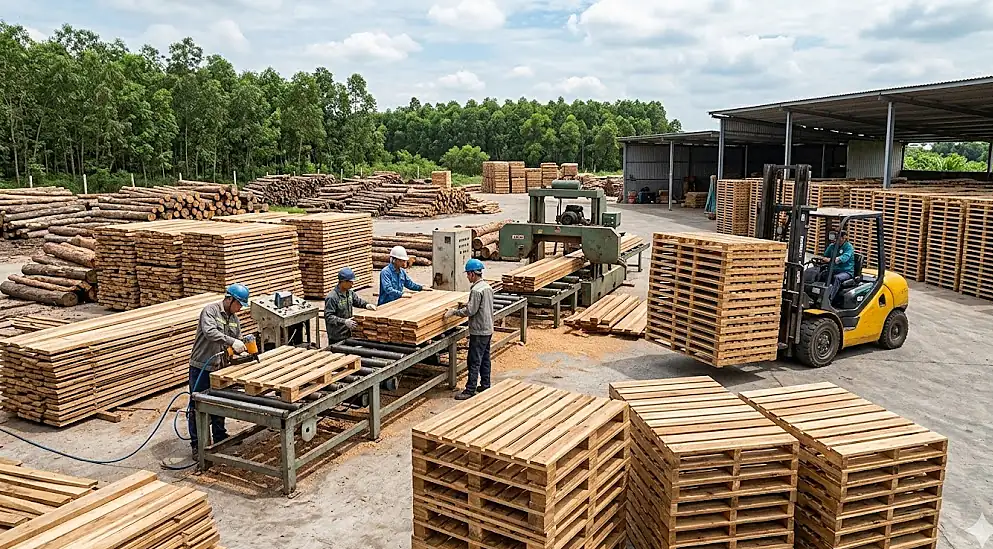
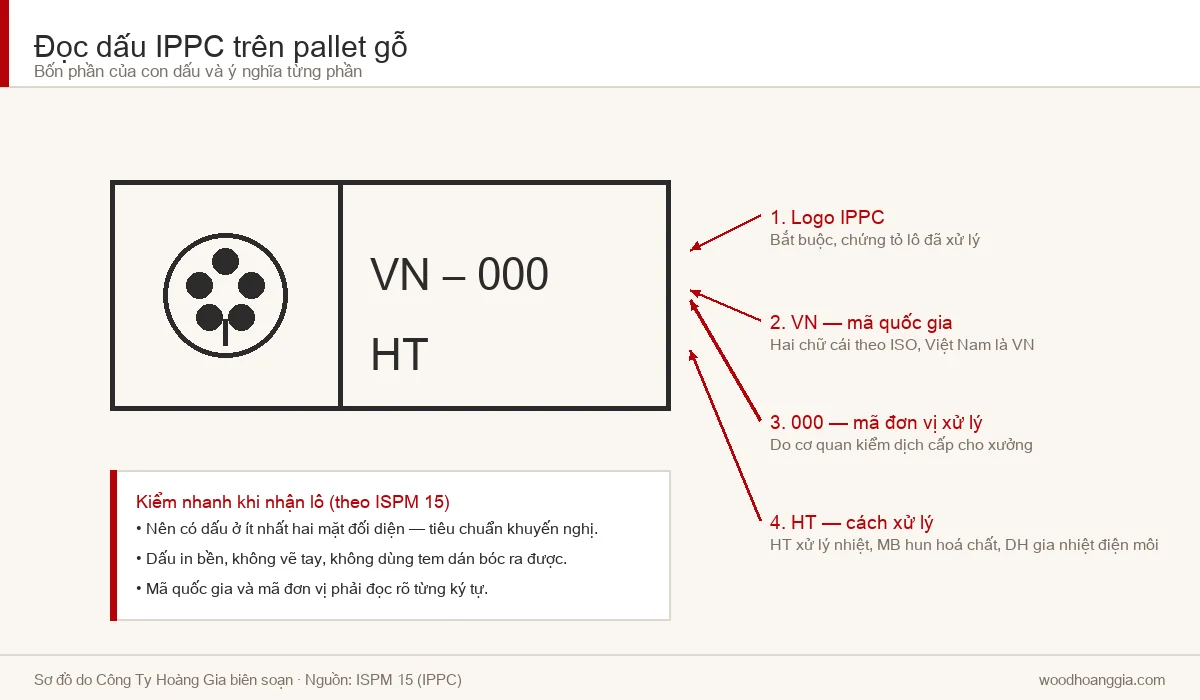
Goods shipped internationally on wooden pallets usually require specific handling procedures. ISPM 15Common heat treatment: wood core temperature 56°C for 30 minutes according to IPPC's ISPM 15 standardThen stamp the IPPC with the correct template.
When buying wooden pallets for domestic use, you can skip this step — specify "not fumigated" to avoid paying extra fees. For export shipments: specify the receiving market, whether it's fumigated or not, who holds the treatment certificate, and which slat the stamp is on.
Faded marks, marks left after cracking, and marks on slats about to be removed are customs risks. Pallets patched from wood of unknown origin should not be stamped before export. Details of the process can be found in ISPM 15 (pallet fumigation); here, simply tick "yes/no" on the purchase checklist.
6. Quantity and delivery schedule
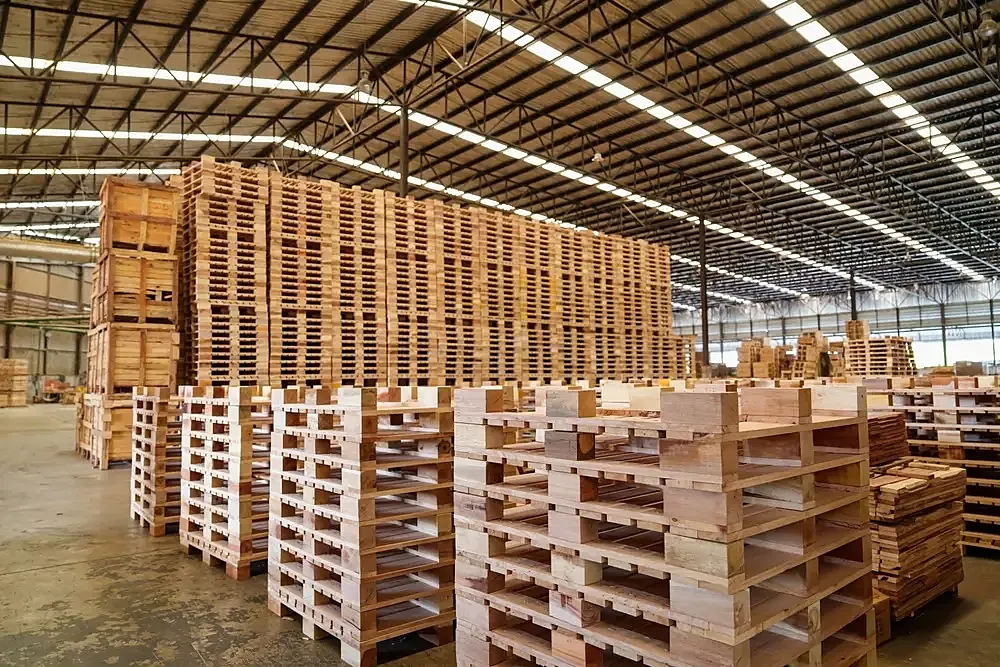
Buying wooden pallets in bulk is different from buying a few dozen. Record the quantity for each batch, not just the total for the year. Note the unloading location (factory, ICD, port), the truck size (tons), whether a pallet lift is available, and the pickup time.
The factory needs lead time for sawing, drying, packing, and ISPM 15 processing. Sending orders close to the ship date may result in missing pallets or missing stamps. Shipments will be split into batches if the warehouse cannot hold all the items at once.
Ask about the pallets being delivered in a stackable configuration, strapping, and whether they include rain-resistant mats. Wet pallets upon unloading are a potential problem. For deliveries far from Ho Nai, it's necessary to specify who is responsible for any broken slats along the way.
Stable order: maintain a consistent specification, submit a monthly plan. Changing the size midway through the process means the workshop has to re-cut the workpiece. Page Supply pallets in bulk This is where recurring requests are submitted.
7. Certificate of Origin (CO) and Certificate of Quality (CQ) documents
CO (Certificate of Origin) and CQ (Certificate of Quality) are the documents factories often require when purchasing wooden pallets to incorporate into their ISO system. The Hoang Gia website states that pallets come with CO and CQ certificates as per quality commitments.
On the checklist, note which documents are needed first and which are for the batch. Export additional ISPM 15/IPPC processed documents. Do not combine CO/CQ certificates with VAT invoices — these are three different types of documents.
The content of the Certificate of Quality (CQ) should match the specific specifications: dimensions, lifting direction, wood type, kiln-dried or not, fumigated or not. A generic CQ stating "meets quality standards" is not helpful when customs or EU customers ask for specific specifications.
Keep photos of the pallets upon delivery, photos of the IPPC markings, and records of missing/excess items. Disputes over overlapping slats or missing markings can only be resolved if photos are taken on the same day of receipt. Purchasing wooden pallets without requiring documentation makes verification impossible when customers inquire about the lot.
Submit a checklist when purchasing wooden pallets at Hoang Gia.
Submit seven lines of information at once: dimensions (mm), 2/4 side and 1/2 side, static/dynamic load, acacia wood/required moisture content, ISPM 15 yes/no, quantity per batch, CO/CQ certificate. Form: woodhoanggia.com/contactLarge orders, delivered in multiple installments: Supply pallets in bulk.
Frequently Asked Questions
Do I need to meet all 7 criteria when buying wooden pallets in small quantities?
Dimensions, lifting direction, and load are still required. ISPM 15 and the CO/CQ certificate can be omitted if the goods are only for internal use. Tolerances must still be recorded for small quantities: a batch of 30 misaligned units means 30 unusable units.
Should I buy new wooden pallets or have them custom-made?
The factory has fixed shelving and containers, so they ship to order, precisely to the millimeter and in the correct vehicle orientation. Ready-made stock is only suitable if the specifications match existing stock. Ask the factory which ones are currently being built to your exact measurements; don't buy from leftover stock. For used items, consider the following points. Used wooden pallets: when should you buy them?.
Can I fumigate the acacia wood pallets after buying them?
It's possible if the wood meets processing standards and isn't rotten. It's cheaper and less risky to have the wood fumigated right from the order. Pallets that have gone through multiple domestic processes, with rusty nails and patched slats, are difficult to stamp with the IPPC mark.
Where can I find the price of wooden pallets?
There are no printed prices in this article. Prices vary depending on wood type, size, 2/4 dimensions, kiln drying, ISPM 15, quantity, and delivery location. Send a seven-line checklist to receive a quote. Don't compare a number online when specifications differ.
Where does Hoang Gia deliver wooden pallets?
Workshop located in Ho Nai, Dong Nai. Delivery is nationwide as stated on the homepage. The unloading point, vehicle type, and pickup time must be specified on the order. For unloading at a port or ICD, please add the recipient and container number if available.
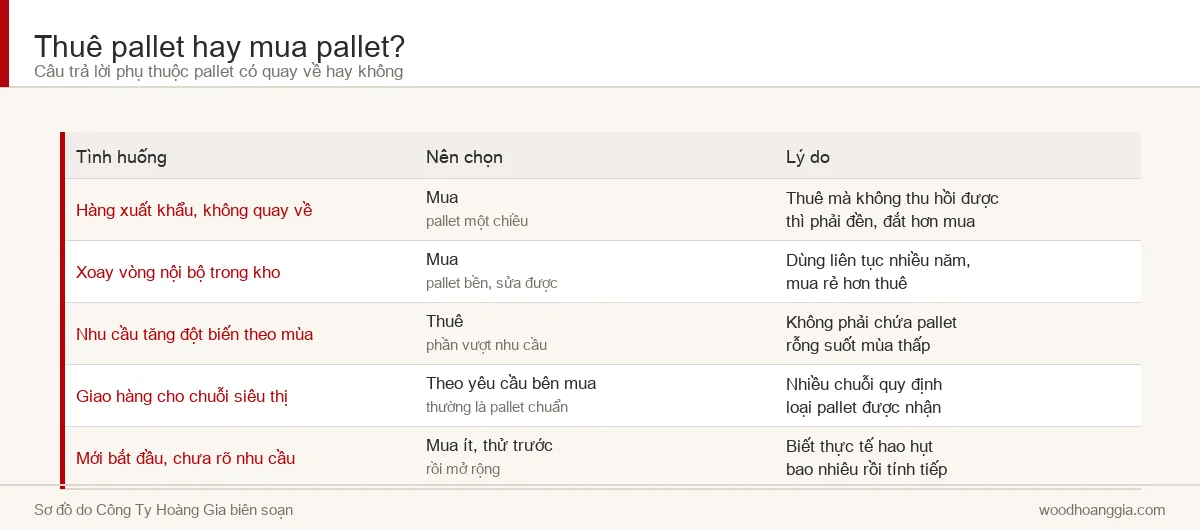
Câu hỏi thuê pallet hay mua pallet nghe như bài toán tài chính, nhưng thực ra nó gọn về một câu hỏi vận hành duy
Trên mặt bên của pallet gỗ xuất khẩu luôn có một con dấu nhỏ hình chữ nhật. Nhiều người quen gọi là dấu hun trùng,