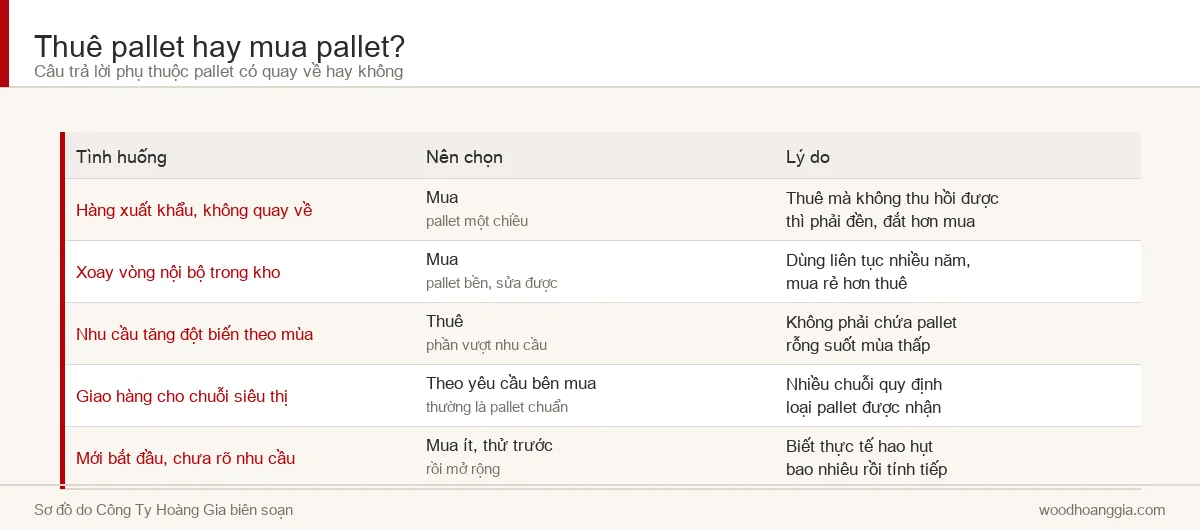
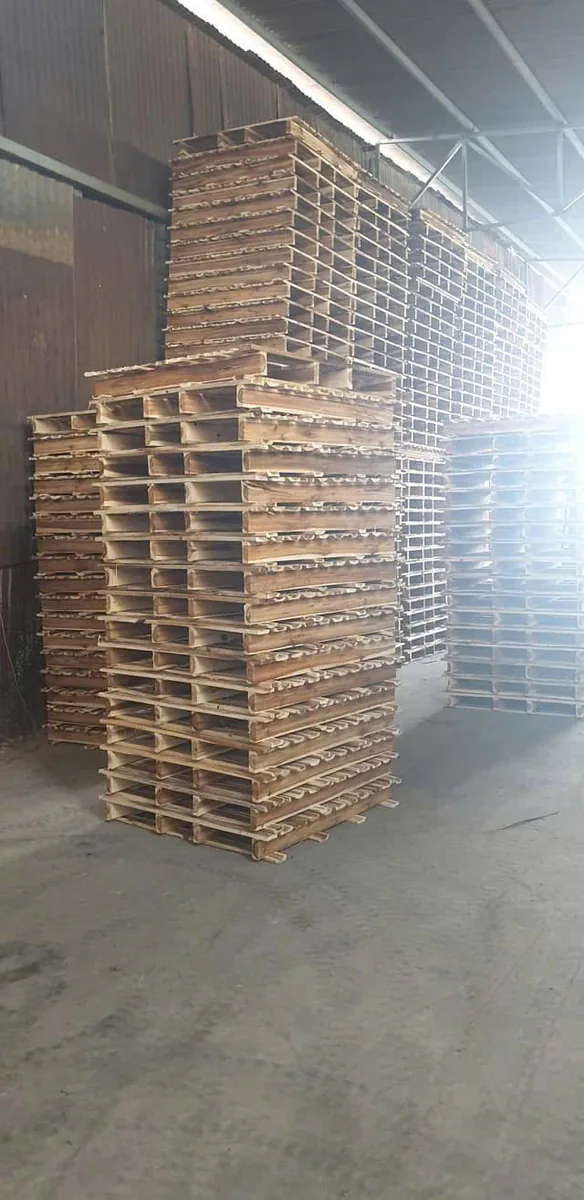
Used wooden pallets These are used pallets that have been collected and resold to other warehouses for reuse. They are cheaper than new ones, but not every batch is usable — and not every application requires the use of used wooden pallets.
This article is for purchasing and warehousing staff considering used goods. Hoang Gia Company manufactures new acacia wood pallets to standard specifications in Ho Nai, Dong Nai; this article does not advertise the sale of used goods, only outlines inspection methods and thresholds for when to stop.
What are used wooden pallets and who uses them?
These are items that have already been transported at least once, then collected, sorted, and resold. Their main users are light-duty warehouses, small workshops, and units needing temporary shelving or yard lining. These items do not have a published load capacity and lack standardized specifications.
Unlike newly manufactured pallets, used pallets often contain a mix of sizes, wood types, and varying degrees of wear and tear. A single truckload might contain pallets that are still in good condition, while others have been patched up.
- Source of goods: collection warehouses, factory liquidation, pallet delivery by transport companies.
- Condition: from nearly new to having many spokes replaced.
- Documentation: Usually does not include CO or CQ certificates like newly manufactured goods.
When are used items still usable?
This type is suitable for light goods, short distances, not requiring high shelving, and not for international shipping. In these situations, the wear and tear on the slats is not yet at a level that would pose a safety hazard.
Reasonable cases:
- Goods are stored in the warehouse, not stacked in multiple layers.
- Lay down ground cover, place empty containers on the ground, and support lightweight materials.
- Internal transportation between two nearby factories.
- Use padded pallets to elevate the shipment off the damp ground.
Even with the above measures, it's still advisable to keep the old pallets separate and not mix them with the main shipment. The proper warehouse organization is detailed in the article on how to store wooden pallets.
When should you avoid buying this type of product?
This type of payment should not be used for heavy goods, shelf-loaded goods, food products, and export goods. All four categories carry significantly higher risks than the potential savings.
- Heavy goods and goods on the shelves — The studs are tired, the nails are loose, and they can no longer hold the original load. The method for choosing the load is discussed in the lesson. wooden pallet load.
- Food, pharmaceuticals, textiles — We don't know what the pallets carried. Oil, chemicals, and fertilizer seeped into the slats and couldn't be washed away.
- Export goods — The faded IPPC mark or replaced nano pin renders the lot invalid. ISPM 15.
- Automated warehouse — The shelving and robots require consistent millimeter tolerances; old pallets are not suitable.
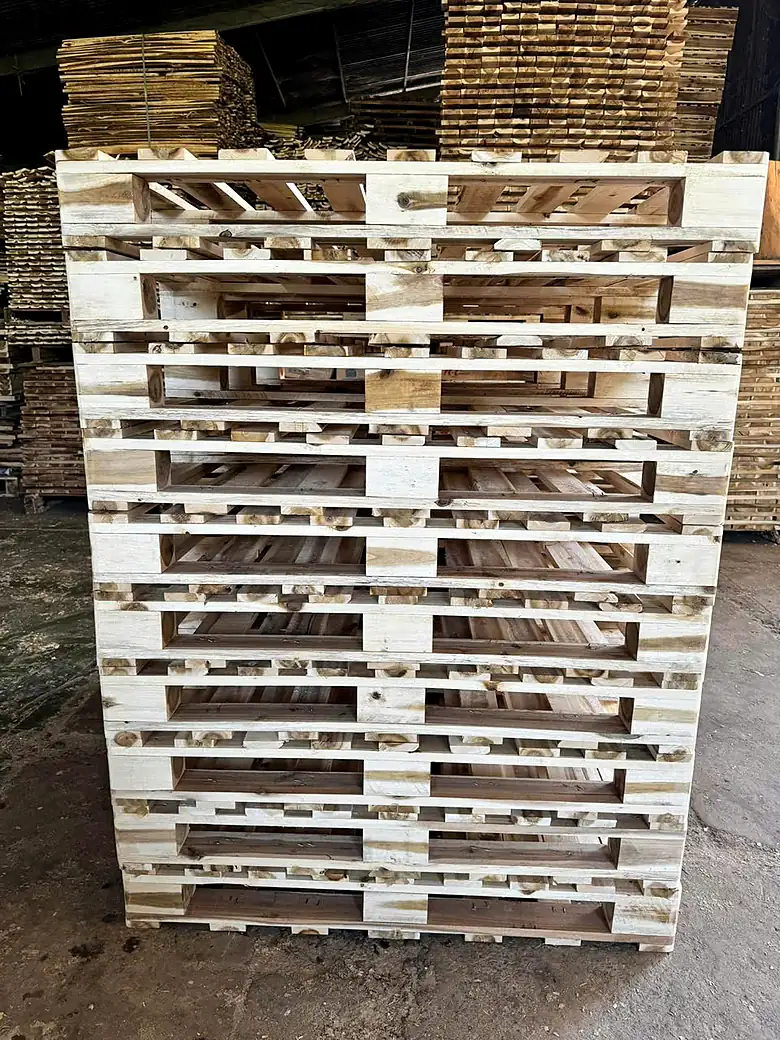
Six points to check when receiving old shipments.
Inspect each vehicle individually, do not take samples and then accept the entire batch. Used vehicles in this batch are not uniform, so taking samples will not reflect the rest.
- Top slats and bottom slats — vertical cracks, fractures, punctures, warping.
- Legs and openings — Misaligned legs and a crooked lifting mouth cause the forklift forks to get stuck.
- Nail — protruding nails, rusty nails, nails driven over old marks.
- Termites, woodworms, mold — Tiny holes, sawdust, patches of white mold.
- Stain — Machine oil, dyes, chemicals, strange odors.
- Patchwork — The replacement wood is of a different species, of a different thickness, and of unknown origin.
Any item found to have one of the six issues should be separated; don't mix them together. Making a report right at the gate is cheaper than processing the entire batch after it has already been moved into storage.
Where are the old wooden pallets and export goods getting stuck?
The problem lies at the IPPC mark and in the replaced wood section. Wood packaged for export must be treated according to standards. IPPC's ISPM 15 Then, stamp it with the correct seal. Reused items often lose this condition over time.
Three common scenarios:
- The stamp is still there but faded, the symbols illegible — customs or the recipient has the right to refuse the shipment.
- The bamboo has been replaced with untreated wood — the whole thing is no longer valid even though the old markings are still there.
- Pallets are cracked and deteriorated after multiple cycles — they are no longer suitable for reprocessing and re-stamping.
If you want to use this batch for export, you have to ask the customer beforehand and factor in the reprocessing costs. Once everything is added up, the difference compared to a new batch is usually negligible.
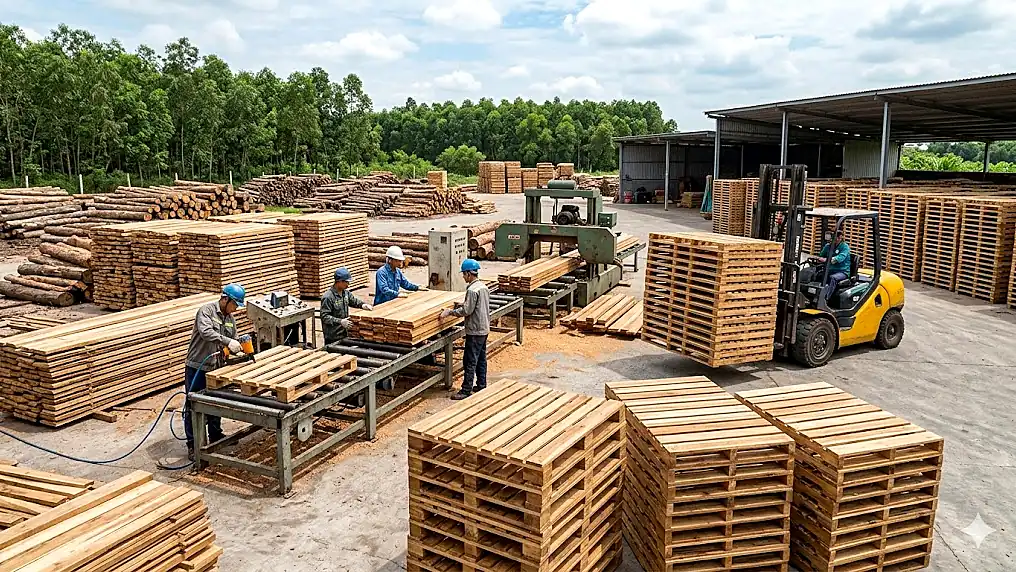
Should you buy used wooden pallets or have new ones made at a factory?
Choose based on the task, not the price ceiling. The table below compares the two approaches based on the criteria that warehouse managers are interested in.
| Criteria | Used wooden pallets | Newly manufactured pallets according to specifications. |
|---|---|---|
| Size | Mixing different sizes makes synchronization difficult. | Correct millimeters according to shelving and containers. |
| Load | No more published numbers | Record static and dynamic loads on the form. |
| Export | Entangled with IPPC markings and patch strips. | Fumigation according to prescription, clearly marked. |
| Life cycle | Short, unpredictable | Longer if stored properly |
| Documents | Usually not | Certificates of Origin (CO) and Certificates of Quality (CQ) are available upon request. |
For daily warehouse operations, where forklifts are already set to a specific size, custom-made forklifts are more advantageous. Before submitting your request, please review... 7 criteria to consider when buying wooden pallets To record all the specifications at once.
Hoang Gia Company manufactures acacia wood pallets to order in Ho Nai, Dong Nai. Please send your specifications via email. contact form To receive a quote for the correct lot size.
Frequently Asked Questions
Can used wooden pallets be used for export goods?
It's acceptable if the lot still has clearly legible IPPC markings and the wood isn't rotten or patched with wood of unknown origin. In reality, pallets that have been used many times often have faded markings, rusted nails, and replaced slats — in which case, they must be re-treated according to ISPM 15 and re-marked, which is no longer cheap. Ask the customer before finalizing the old lot.
How much cheaper are used wooden pallets compared to new ones?
There is no fixed price difference. The price depends on the condition of the slats, the type of wood, the size, and the remaining quantity in the lot. An older lot of the same size but with thinner, patched slats may be more expensive in the long run because it will deteriorate sooner. Price comparisons should take into account the condition of the slats, not the number of slats remaining.
How can you tell if a used pallet can still handle the load?
It's impossible to tell from the external appearance. This type no longer has the stated load capacity as new goods because the spokes are fatigued and the rivets are loose. The safest approach is to reduce the load compared to the original, test one with genuine goods first, and avoid using old stock for heavy goods or goods on high shelves.
What should I do if my reused pallets are infested with termites?
Separate them immediately from the clean batch; do not store them in the same warehouse. Termites can spread to intact pallets and even new pallets. Pallets that are deeply infested with termites should be discarded; do not spray them with insecticide and then return them to the warehouse—especially food warehouses where the use of chemicals near goods is generally prohibited.
Should you buy used goods or have them custom-made to order?
With stable warehouse operation and forklifts already set to a specific size, it's more advantageous to have new items made precisely to the millimeter. Used items are suitable for temporary stacking, yard lining, and light internal storage. Mixing different sizes in the warehouse can lead to warehouse staff picking the wrong items and causing shelving issues.
Câu hỏi thuê pallet hay mua pallet nghe như bài toán tài chính, nhưng thực ra nó gọn về một câu hỏi vận hành duy
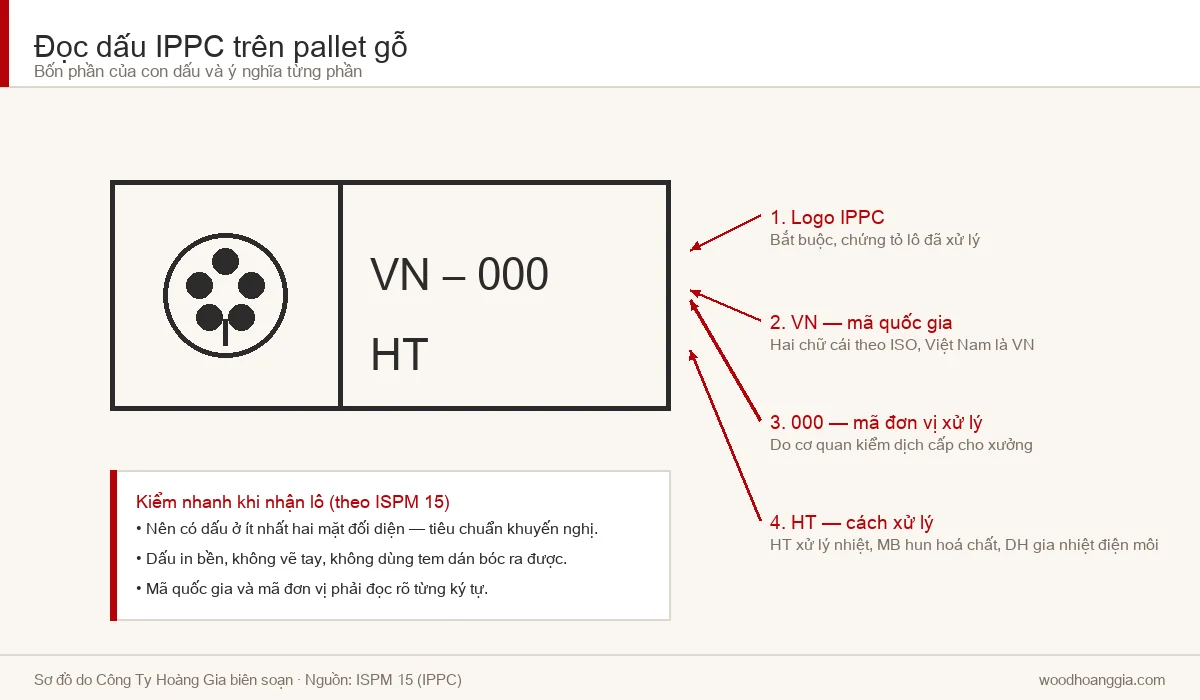
Trên mặt bên của pallet gỗ xuất khẩu luôn có một con dấu nhỏ hình chữ nhật. Nhiều người quen gọi là dấu hun trùng,