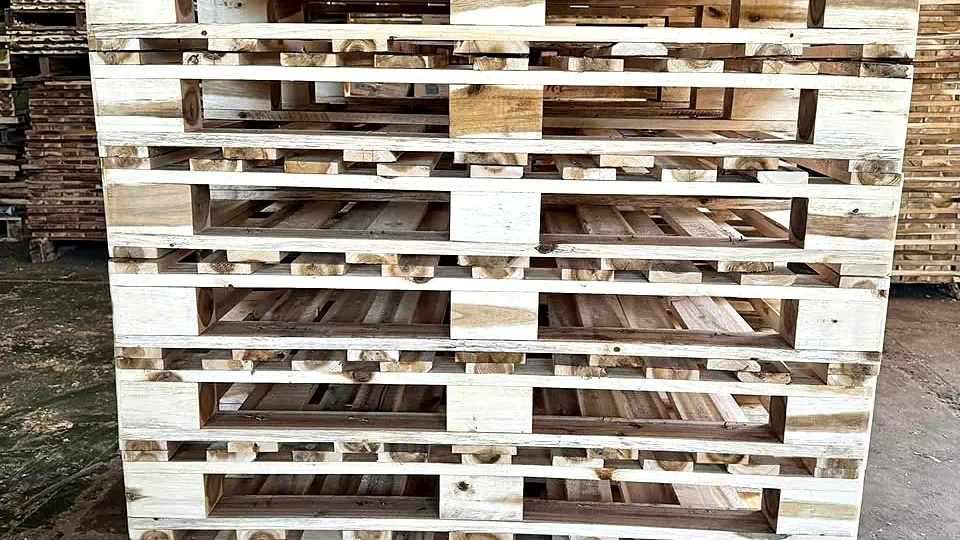
Wooden pallets and plastic pallets They're both doing the same thing: stacking goods for forklifts. They don't alternate in every warehouse. Exports require ISPM 15, so choose that option. wood (Process HT/MB and then stamp). Store in a cool, dry place, wash frequently, and ensure food surfaces are clean. consider plasticThe specific requirements for each field are detailed in the article. Pallets for Food, Textile and ElectronicsFor heavy items that require on-site slat adjustment, choose this option. wood.
Hoang Gia Company We do not sell plastic pallets.This comparison helps the factory finalize the material, then order acacia wood pallets if wood is the preferred choice. Download each code from the price list. The Hoang Gia homepage states the load capacity of acacia wood pallets. from 1 to 2 tons — common band.
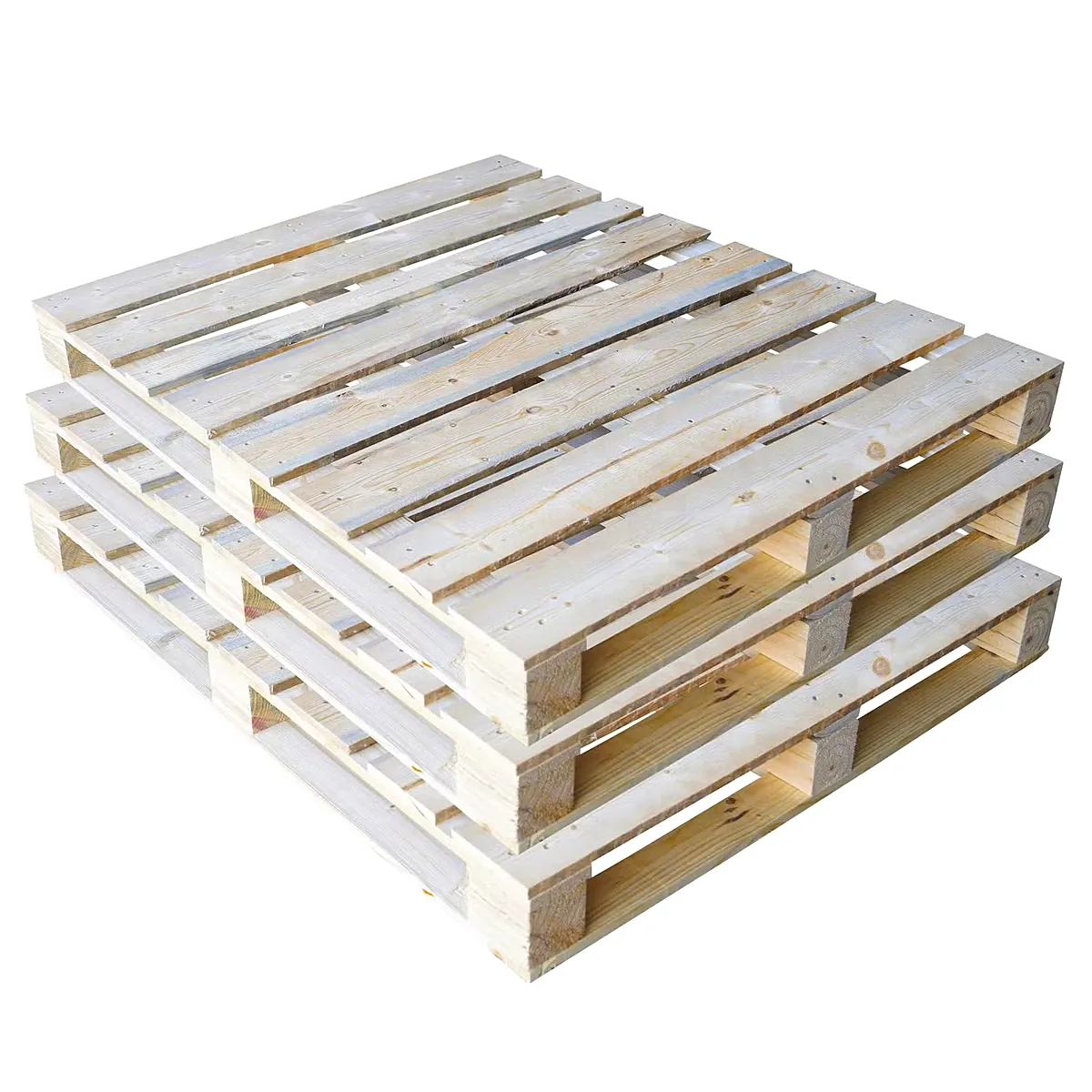
What are the differences between wooden pallets and plastic pallets?
Wooden pallets and plastic pallets differ in materials, repair methods, quarantine procedures, and cleaning requirements. Even pallets of the same size (e.g., 1,200 × 1,000 mm) will behave differently when wet, when touched by a forklift, or during export.
| Criteria | Wooden pallets | Plastic pallets |
|---|---|---|
| Material | Sawn timber (at the Royal Palace: Melaleuca wood) | Molded plastic, one-piece or modular. |
| Export / ISPM 15 | Raw timber must be processed and stamped. | Not classified as wood packaging; APHIS lists plastic pallets as a substitute for WPM. |
| Repair at the workshop | Reattach the slats, replace the legs. | It's difficult to repair with readily available nails and a saw. |
| Cleaning / moisture storage | Absorbs moisture; may become moldy if left wet. | Washable, low water absorption |
| Heavy goods | Suitable; declared range HG 1–2 tons | Depending on the mold — ask your plastic supplier. |
| Wood chips, sawdust | It's possible if the teeth are bad. | No wood splinters. |
The table does not have a price column. Prices vary depending on size, load, quantity, and fumigation — no fictitious numbers. See the factor list in the price post (when published) or request a quote.
There is no "absolute win" for wooden or plastic pallets. Wood wins in terms of repair and export inspection. Plastic wins in terms of water washing and wet storage. Each situation below determines which side is better.
When should you choose wooden pallets?
Choose wood — when comparing wooden pallets and plastic pallets based on what the pallets are for — if the factory needs one or more of the following for certain purposes.
For export, packaged timber must comply with ISPM 15. Wooden pallets are treated with HT (core ≥ 56°C / ≥ 30 minutes) or MB, then stamped with IPPC. This is what the woodworking shop does every day. Details: What is ISPM 15?.
The goods are heavy, have been stacked for a long time, and require a forklift to come in every day. The timber is properly joined at the correct face and base to withstand the stated load range. Repair broken slats on the spot using wood and nails, without waiting for the mold to be cast.
Many non-standard specifications are needed. Face dimensions 1,200 × 1,000, 1,200 × 800, 1,100 × 1,100 or customer-specified sizes — sawing workshop available. Plastic depends on pre-made mold.
We want a woodworking shop near the factory. Hoang Gia manufactures acacia wood pallets in Ho Nai, Dong Nai; see product catalog.
When comparing wooden and plastic pallets, wood is weaker when it comes to staying wet for extended periods, getting moldy, and handling food items that require daily washing. If your warehouse is one of those situations, read the plastic section before ordering wood.
When should you consider plastic pallets?
Consider plastic — and find another supplier, as Royal doesn't sell it — when:
- The warehouse is damp, the floor is washed frequently, and pallets are exposed to water every day.
- Food or pharmaceutical products require smooth, low-dust, and easy-to-wash surfaces.
- A closed loop in a factory, not exported Packed wood.
- A consistent weight of each pallet is required (molded plastic).
Plastic pallets do not meet ISPM 15 standards because they are not wooden pallets. This is an advantage for foreign customers. Are not They want wood. That's not a reason to replace the wood if the customer insists on the exact same smoked wood pallet.
Plastic is difficult to repair on-site. A broken leg usually requires a pallet. A broken wooden slat can be re-attached. If the warehouse crew is familiar with saws and nails, wood is cheaper to operate — you don't need percentages to see that.
Wooden pallets and plastic pallets also differ in individual weight: wood is heavier when wet; molded plastic is more stable in batches. This article does not make up the weight of each item.
Don't use this article to criticize plastic. Use this article to... Don't buy the wrong materials..
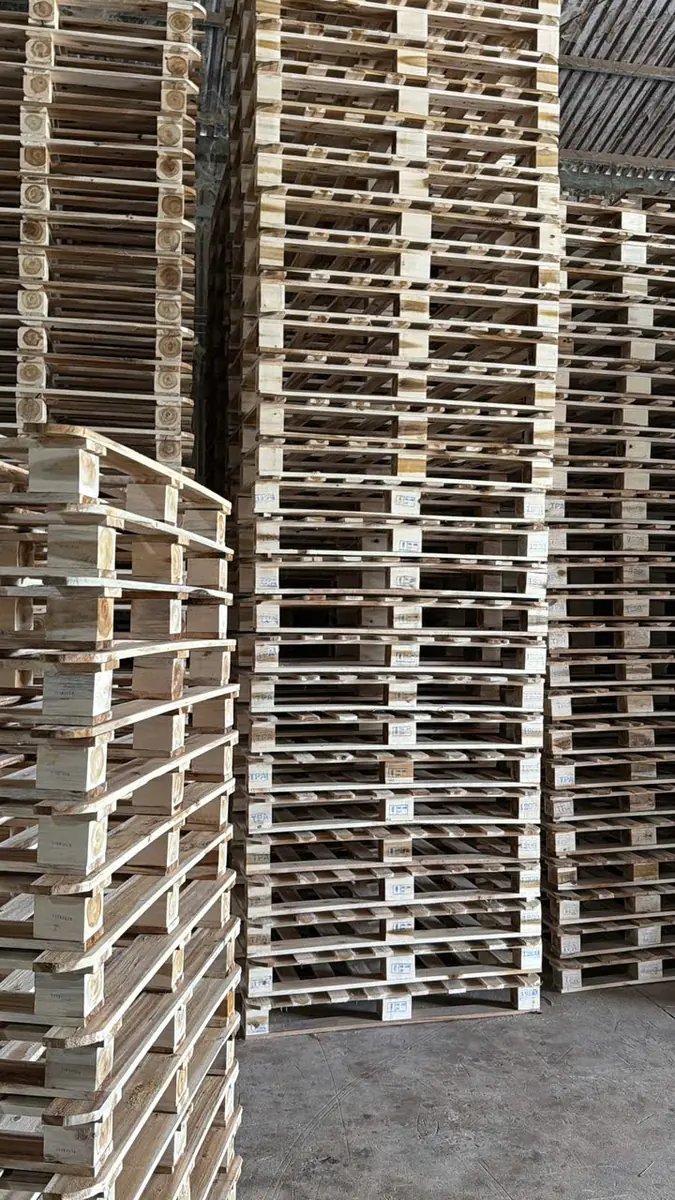
For export, should you choose wooden pallets or plastic pallets?
Exports include ISPM 15 Wooden pallets and plastic pallets go in two different directions.
- Customer requests treated wooden pallets: select wood, make HT or MB, stamp IPPC. This is the most common method encountered at Vietnamese factories.
- Customers who refuse wooden packaging and only accept plastic or metal: please choose. plastic (or a substitute). USDA APHIS Listing plastic pallets as an alternative, not subject to WPM regulations.
Don't ship unmarked wooden pallets to the US, EU, or Japan hoping that "as long as the cargo on top is clean, it's fine." Inspectors will read the markings on the wood. And don't just stamp IPPC marks on plastic pallets for the sake of it.
If the shipment includes both domestic and export shipments: separate into two pools. Domestic pallets can be unmarked wood, or plastic if the warehouse is wet. Export pallets must be ISPM 15 graded wood, with the correct water level for acceptance (1,200 × 1,000, 1,200 × 800, 1,100 × 1,100…). Wooden and plastic pallets should not be mixed in one booking if the customer has specified the material.
Wooden and plastic pallets in warehouses with high humidity, food, and heavy goods.
Three common situations where you ask a question and answer directly.
Moisture storage / seafood / floor cleaning. Consider plastic. Wood, when wet, will absorb water, become heavier, and be prone to mold. If you still want wood: dry it, elevate it, and protect it from rain — see the preservation instructions when posting. Don't make up the number of months it will last.
Clean food, subject to audit. Consider plastic if the auditor sees sawdust and gaps between the slats. Wood is still usable if it is dried, planed, not rotten, and (if exported) has ISPM 15. Ask the auditor if they prohibit wood or only wet wood.
Heavy items, repair them on the spot. Select the wood. Broken slats are re-assembled during the shift. Royal Loading System 1–2 tons This is a general announcement; the order specifies static load/dynamic load. Read wooden pallet load before finalizing the face.
The three sentences above are sufficient to decide on wooden pallets and plastic pallets depending on the situation. A 10-criteria scoring system is not necessary.
Summary of the decision:
1. Goods for export + customer demands smoked wood → wood, ISPM 15. 2. Wet warehouse or daily washing → consider resin. 3. Heavy goods, warehouse team can repair the slats → wood. 4. Auditor prohibits wood chips → double-check; if completely prohibited, then resin. 5. Unsure → send customer specifications to the wood factory beforehand, don't buy resin "for the sake of modernity".
Does Hoang Gia sell plastic pallets?
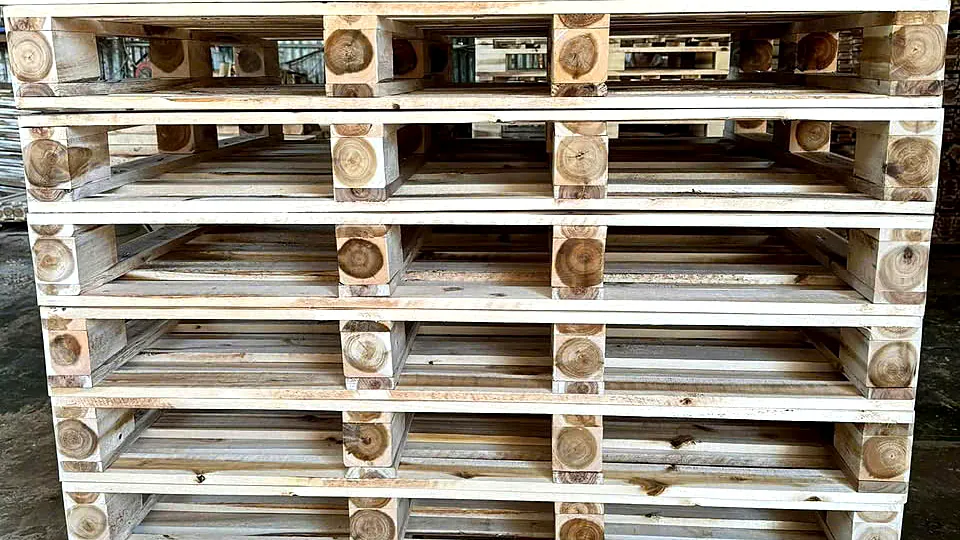
No. Hoang Gia Company manufactures acacia wood pallets, 2-way/4-way, which can be fumigated with ISPM 15, at its factory in Ho Nai, Dong Nai. We do not sell plastic pallets. We do not write about pallet beds.
After comparing wooden pallets and plastic pallets, if wood wins, submit the application. Guide to buying wooden pallets:
- Dimensions (mm), 2-way / 4-way, 1-sided / 2-sided.
- Static/dynamic load required per unit.
- Is there ISPM 15? Is the code HT or MB?
- Quantity, delivery location.
Form: woodhoanggia.com/contactIf, after comparing wooden pallets and plastic pallets, plastic is the better option, find a plastic supplier — this article doesn't recommend competitors. Ho Nai Workshop accepts orders for 2-way/4-way acacia wood, with or without fumigation.
Frequently Asked Questions
Which is better: wooden pallets or plastic pallets?
There is no single better type. The choice between wooden and plastic pallets depends on the specific requirements. For export applications requiring ISPM 15, wood is a better option. For humid warehouses, frequent washing, or food handling, plastic should be considered. For heavy goods requiring on-site slat adjustments, wood is the better choice.
Are wooden pallets mandatory for exports to the US and EU?
The exact type of wood is not required. The requirement is: if using raw wood, it must meet ISPM 15 standards and bear the IPPC mark. Plastic pallets are not considered wooden pallets. If the customer specifies "wooden pallet treated," then treated wood must be shipped; silent plastic is not an option.
Does Hoang Gia sell plastic pallets?
No. Hoang Gia only manufactures acacia wood pallets in Ho Nai, Dong Nai. This comparison is for the factory to choose materials. If you need wood: send specifications via the contact form. If you need plastic: find another plastic factory, not one listed in this article.
Can wooden pallets be washed with water like plastic ones?
Wood should not be treated like plastic. Wooden pallets and plastic pallets differ in their water absorption: wood absorbs moisture, becomes heavier, and is prone to mold if wet for too long; plastic can be washed daily. Seafood warehouses or clean rooms tend to favor plastic. For dry warehouses, bagged goods, and cardboard boxes, wood is sufficient.
Is it possible to repair wooden pallets at the warehouse?
Yes, for common broken slats and legs: disassemble, reassemble, and replace the slats. That's why heavy goods are often shipped in wood. Plastic pallets with broken legs usually have to be discarded. After repair, if the pallet bears the ISPM 15 mark, do not reassemble untreated slats into the export batch.
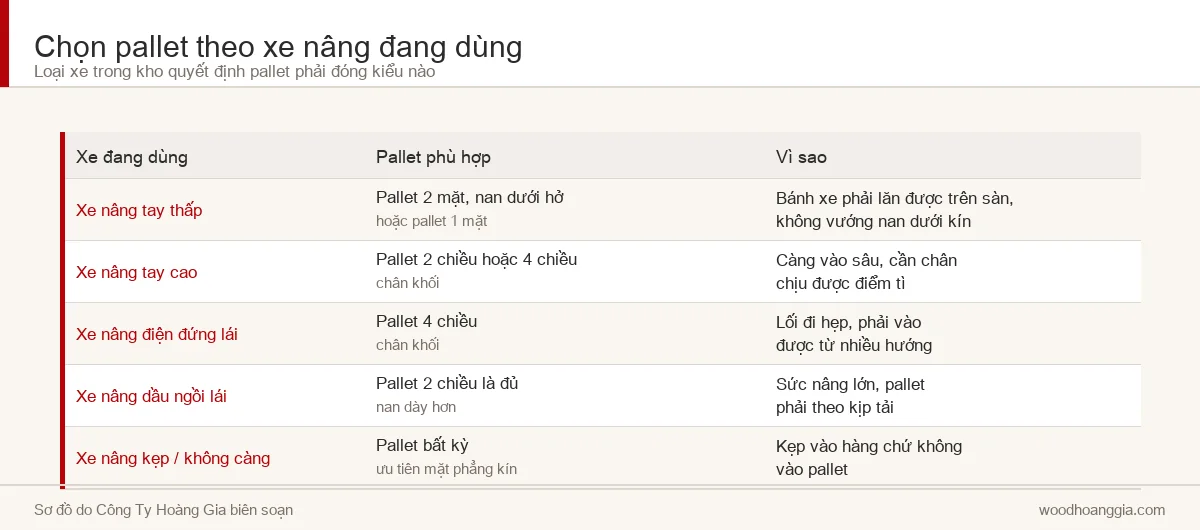
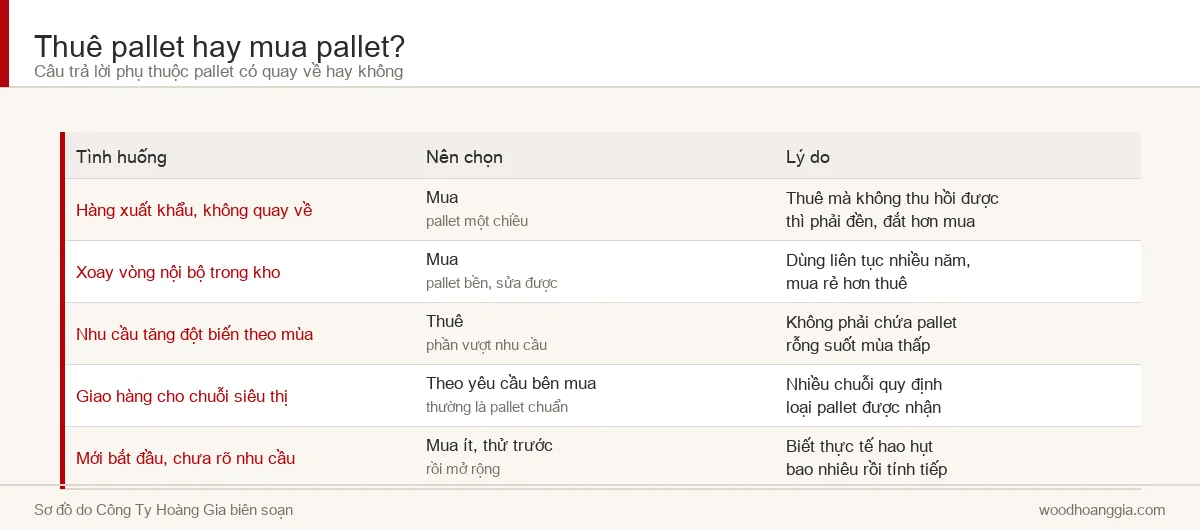
Câu hỏi thuê pallet hay mua pallet nghe như bài toán tài chính, nhưng thực ra nó gọn về một câu hỏi vận hành duy
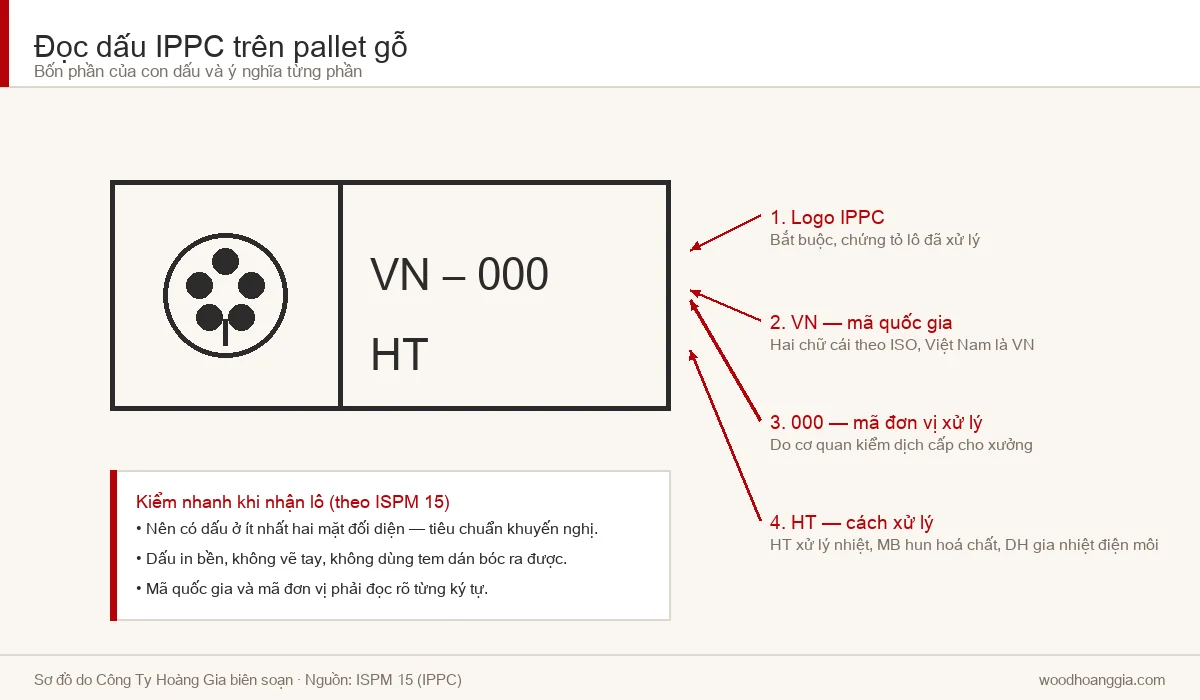
Trên mặt bên của pallet gỗ xuất khẩu luôn có một con dấu nhỏ hình chữ nhật. Nhiều người quen gọi là dấu hun trùng,