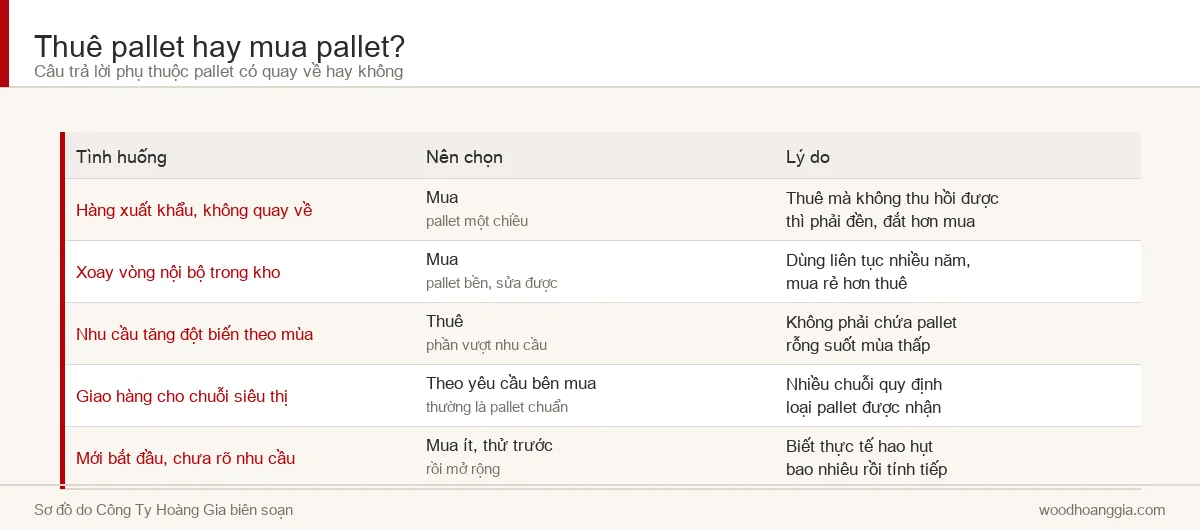
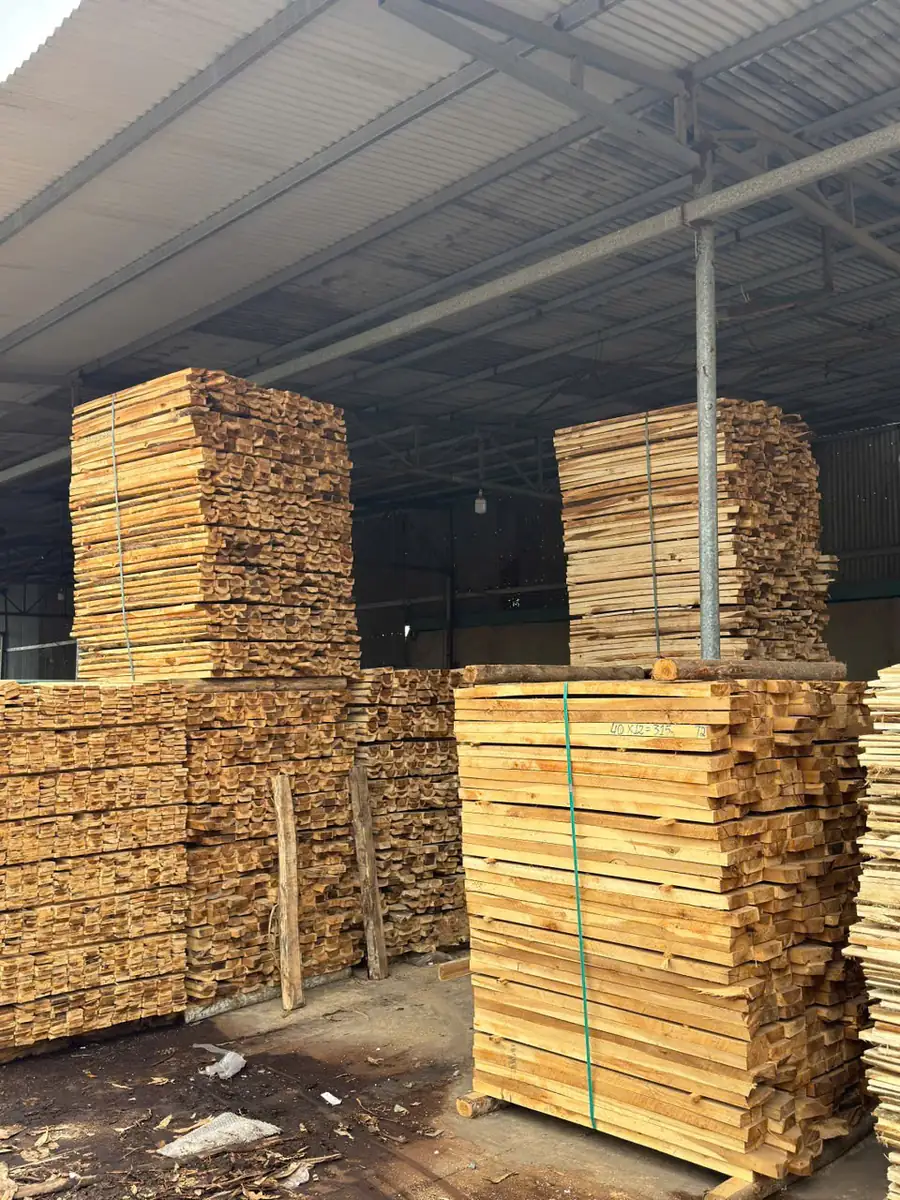
Wood for pallets In Vietnam, the wood used is mainly from plantation forests: Melaleuca, acacia, and pine. These three groups differ in hardness, nail-holding capacity, resin content, and how they react during drying—therefore, they cannot be arbitrarily substituted for each other in the same order.
This post is for a buyer comparing quotes from different factories and noticing that each place is offering a different type of wood. Hoang Gia Company manufactures acacia wood pallets at its factory in Ho Nai, Dong Nai.
What types of wood are used for making pallets in Vietnam?
The three most common groups are acacia, eucalyptus, and pine, all of which are plantation timbers. This is why domestic pallet prices are more stable compared to those made from naturally harvested wood.
The common points among all three are: moderately soft, easy to cut to size, easy to nail, and a consistent supply. The differences lie in the details that the warehouse manager will notice after a few months of use.
- Melaleuca — the main product line for most pallet factories in the South.
- Glue — Very close to the Melaleuca forest, many places use the name interchangeably.
- Information — Lighter, straight-grained, resinous.
What are the differences between acacia wood and eucalyptus wood?
In practice, these two names often refer to the same group of forest tree species and are used interchangeably. Therefore, simply reading the names on the invoice is not enough to compare the two quotations.
Instead of debating names, procurement should finalize three measurable things:
- Thickness of slats and legs Measured in millimeters, with tolerances.
- Target humidity and how to measure upon receiving the goods.
- Actual sample — Keep one as a reference for subsequent batches.
These three numbers indicate quality much more clearly than the wood species label. The moisture content and drying process are detailed in the article. Kiln-dried sawn acacia wood.
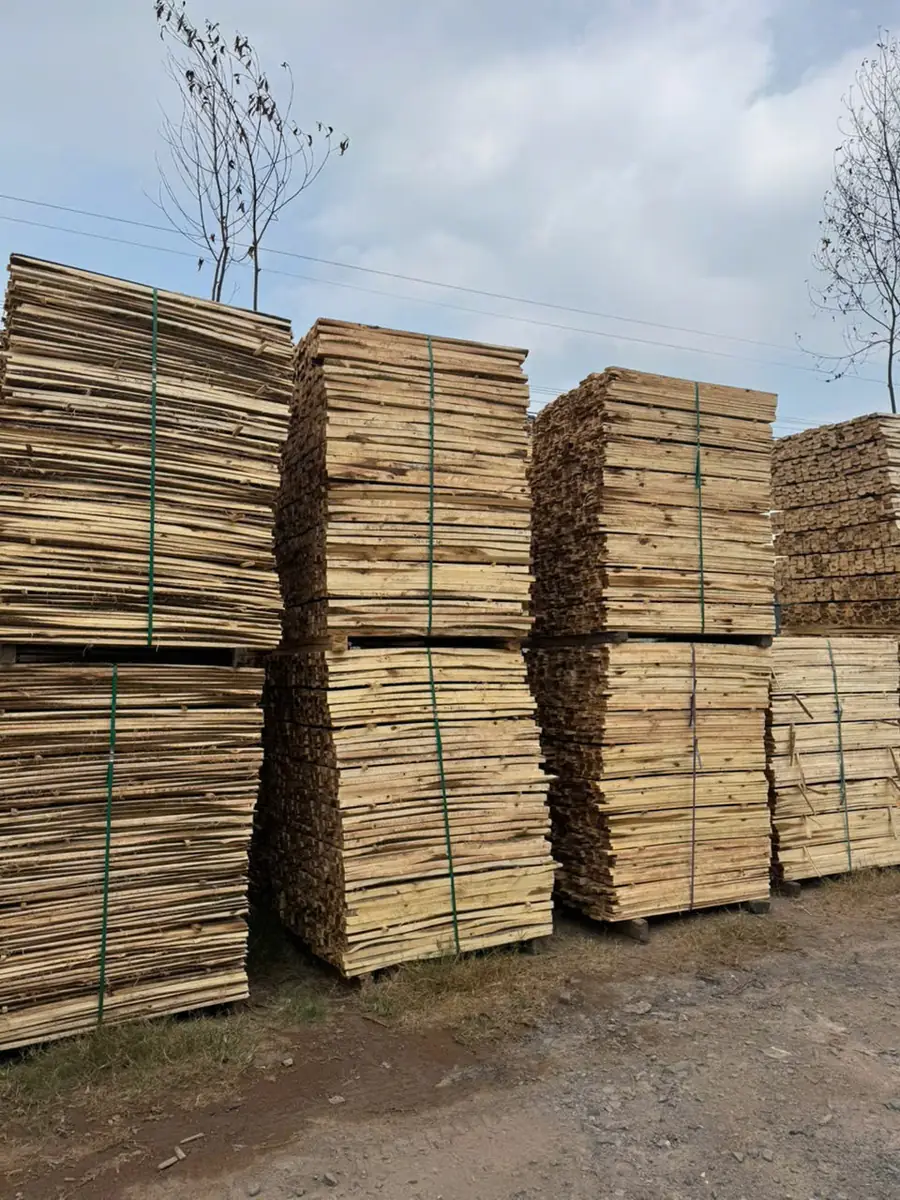
Can pine wood be used to make pallets?
Yes, and quite common with lightweight goods. Pine is lighter, so the bark weight is reduced, and the straight grain means less waste when cutting. However, there are two points to consider beforehand.
- Wood resin — Pine wood contains resin, which can seep out and stick to the packaging when exposed to heat or in open containers. This is especially important for textiles, paper goods, and food products.
- Softness — The surface of the slats is more prone to dents and chipping when the forklift's forks repeatedly strike it.
For heavy loads or pallets with high turnaround times, most warehouses choose acacia and eucalyptus wood. The method for determining the load capacity is discussed in the article. wooden pallet load.
Why should you avoid using the term "mixed wood" on the receipt?
"Mixed timber" is not a single species of wood. It refers to a mixed lot of various types, usually sourced from different suppliers. Accepting such lots means there is no control over quality between orders.
Three specific risks:
- Different types shrink, and the seams loosen after a few weeks in storage.
- The nail-holding ability is inconsistent; some nails are held firmly while others are loose within the same batch.
- Subsequent orders cannot replicate the quality of the previous ones, even at the same price.
A low price quote that includes the phrase "mixed wood" cannot compare to a quote that clearly specifies the species. Other factors that make up the unit price are detailed in the article. wooden pallet prices.
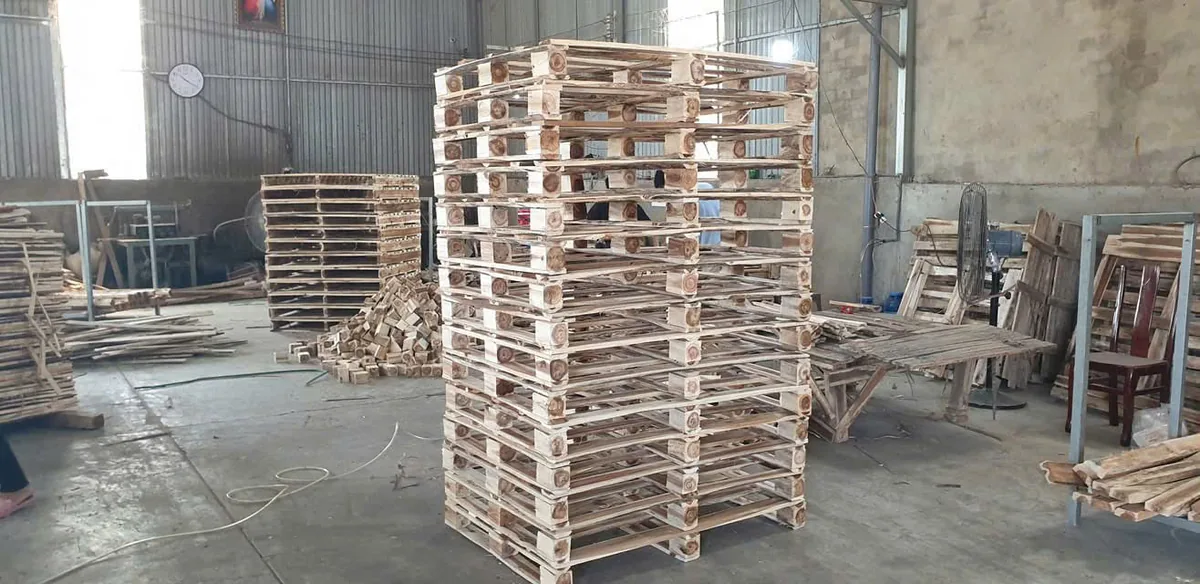
Choose the type of wood based on the application, not the price ceiling.
The decision should start with the type of goods to be placed on the pallet, not with the cheapest price quoted.
| Product type | Priorities when choosing wood |
|---|---|
| Heavy items, put them on high shelves. | The group is harder, with thicker slats and a sturdy base. |
| Fabric, paper, packaging | Avoid species with less grit and those with high resin content. |
| Packaged food | The wood is dry, clean-surfaced, and free of any strange odors. |
| Light goods, one-way shipping | Lightweight species to reduce rind weight. |
For export shipments, the type of wood cannot be replaced by a processing step. Packaged wood must still meet certain standards. IPPC's ISPM 15 standard Then stamp it, regardless of the species used.
What should I check when receiving a shipment to ensure it's the correct type of wood I ordered?
No specialized equipment is needed. Four simple steps, performed right at the gate, are sufficient to detect pallet wood shipments that do not match the signed order.
- Compared to the current standard sample. Place a piece from the new batch next to the sample piece from the previous batch, and examine the color, grain, and thickness of the slats. If there is a clear discrepancy, stop accepting the product and make a report.
- View the cross-section of the slat end. A cross-section reveals the wood grain and dryness more clearly than a flat view. A cross-section that is still dark and wet means it has not yet reached the desired moisture content.
- Smell and touch. The smell of rosin is easily recognizable. Products contaminated with rosin should not be shipped in for textiles or food products.
- Try pulling out a nail. If the nail slips out slightly, it's a sign that the wood is softer or more damp than agreed upon.
Record the results of these four items in the delivery receipt. After a few batches, the warehouse will have a solid basis for evaluating the factory, instead of just relying on the type of wood used for the pallets as stated in the contract.
How should I specify the type of wood on the order form?
A single line of species name isn't enough. The form should have four pieces of information together so the factory doesn't have to guess.
- Use the specific species name, do not write "mixed wood" or "plantation wood".
- The thickness of the top slats, bottom slats, and foot slats, in millimeters.
- Target moisture content and measurement time — at the time of production or at the time of delivery.
- Is ISPM 15 processing required, and what is the receiving market?
Maintaining a single timber species for the main shipment allows the warehouse to compare batches and detect changes in quality early. A complete list of species to be finalized can be found in the article. 7 criteria to consider when buying wooden pallets.
Frequently Asked Questions
Are acacia wood and eucalyptus wood the same type of wood?
In the Vietnamese woodworking and pallet manufacturing industry, these two names are often confused for the same group of timber used in forestry. Therefore, the name on the label is not enough to identify the goods. The surest way is to examine a sample of the actual slats, confirm the thickness and moisture content, and then note down the factory's batch code.
Can pine wood pallets be used for export goods?
Yes, if that lot is processed according to ISPM 15 and stamped with IPPC like all other species. This standard applies to packing wood in general, without exception. It's also important to note that wood resin can seep out and contaminate the packaging.
Which type of wood has the best load-bearing capacity?
There's no single answer, as the load capacity of a pallet is determined more by its construction than by the type of wood: slat thickness, number of slats, leg style, and nailing method. A thicker slat made of softer wood can still withstand more than a thinner slat made of harder wood.
Why do workshops often ask what the shipment is carrying before advising on the type of wood?
Because surface requirements vary by industry. Textiles and food products are sensitive to wood chips and resin stains; heavy items require thick slats and sturdy legs. Knowing the type of product beforehand allows the factory to select the appropriate wood type and processing method from the very first batch.
Câu hỏi thuê pallet hay mua pallet nghe như bài toán tài chính, nhưng thực ra nó gọn về một câu hỏi vận hành duy
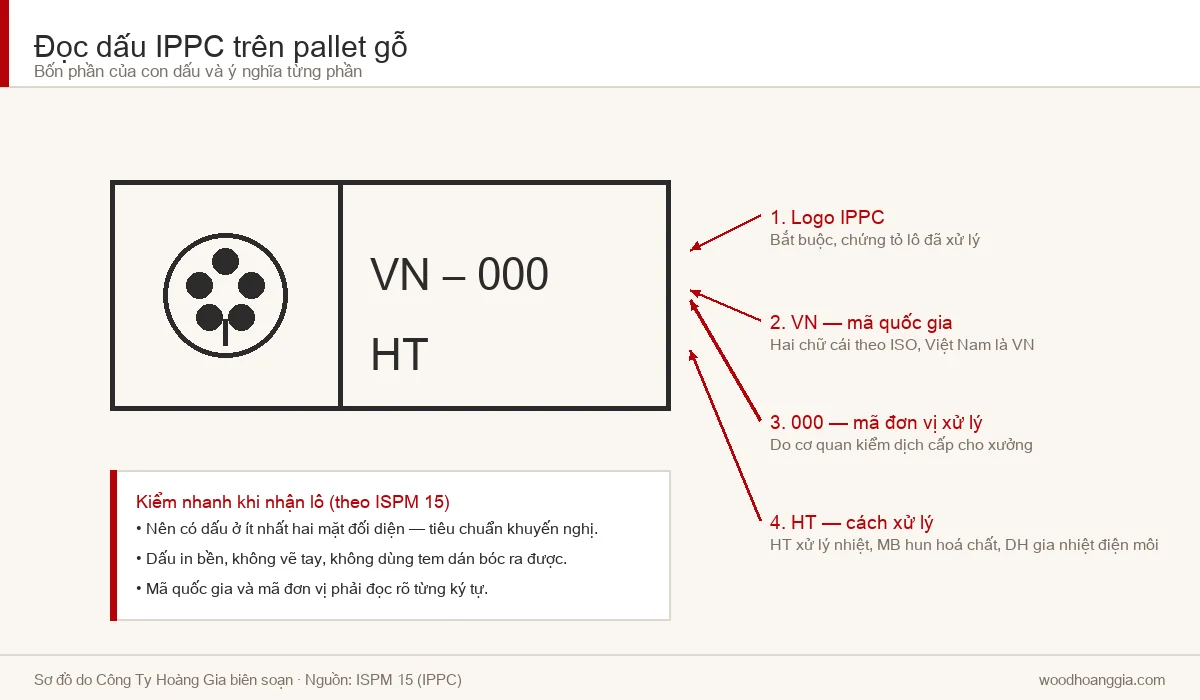
Trên mặt bên của pallet gỗ xuất khẩu luôn có một con dấu nhỏ hình chữ nhật. Nhiều người quen gọi là dấu hun trùng,